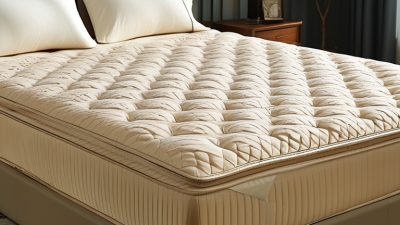
Top 10 Muleton Fabric Suppliers for Global Buyers

Choosing the right Muleton Fabric supplier affects comfort, durability, pricing, and delivery reliability. Global buyers need more than attractive samples. They need evidence.

Textile engineer Dr. Subhash K. Batra explains, “Fabric performance begins with matching construction to the product’s real use.” This principle guides our selection. A supplier may offer soft, brushed Muleton Fabric, yet softness alone proves little. Buyers should examine fiber composition, fabric weight, width, shrinkage, colorfastness, and pilling resistance. Small details matter. A 280 GSM fabric can feel warm in one blend and flat in another.

This guide introduces ten Muleton Fabric suppliers serving international buyers. Each profile considers manufacturing experience, product consistency, customization capacity, minimum order quantities, export support, and quality documentation. Samples should be tested after washing, not only inspected under showroom lights. That step is often missed.

Supplier claims still require careful verification. Certifications, laboratory reports, and factory photographs can support trust, but they do not replace independent testing. Lead times may change during peak seasons. Prices may exclude packaging, freight, or inspection fees. We acknowledge these limits because textile sourcing is rarely perfectly predictable. A promising supplier can still disappoint when communication is slow or specifications remain vague. The strongest choices combine practical expertise with transparent records, responsive service, and repeatable Muleton Fabric quality. This ranking is a starting point, not a substitute for due diligence.

Top 10 Muleton Fabric Suppliers for Global Buyers

Muleton Fabric Defined: Fiber Content, Weave, and 180–350 GSM Range

Top 10 Muleton Fabric Suppliers for Global Buyers

Muleton fabric usually describes a soft, brushed textile with a warm hand feel. Its fiber content may be 100% cotton, polyester, or a cotton-polyester blend. Cotton offers natural softness and breathability. Polyester can improve strength, drying speed, and price stability. Blended options often balance comfort with easier care.

The base weave is commonly plain or twill. Brushing raises fine fibers on one or both sides, creating the recognizable fleece-like surface. Plain weave feels cleaner and lighter. Twill can provide better drape and durability. However, “muleton” is not defined identically in every market. Buyers should request a construction sheet, not rely on the name alone.

A practical weight range is 180–350 GSM. Around 180 GSM suits lightweight linings, sleepwear, and seasonal garments. Fabrics near 250 GSM feel fuller for blankets, robes, and children’s products. At 350 GSM, warmth and absorbency increase, but drying becomes slower. I once judged a fabric by weight alone and missed excessive pilling after washing. That was a useful mistake. Ask suppliers for shrinkage, colorfastness, pilling, width, and composition test results. Physical samples should be washed before bulk approval. Slight variation may remain between production batches.

Supplier Screening Metrics: ISO 3801 GSM, MOQ, Capacity, and Lead Times

For global buyers comparing the top ten muleton fabric suppliers, measurable evidence matters more than polished catalog photographs. Request a laboratory GSM report using ISO 3801, which determines fabric mass per unit area. Check three production rolls, not one sample. A 320 GSM specification can drift between 305 and 335 GSM without strict process control. That difference affects warmth, cutting waste, and freight calculations.

Set a practical screening sheet for MOQ, monthly capacity, and lead time. For example, record whether a supplier accepts 1,000 metres, produces 80,000 metres monthly, and ships repeat orders within 30 days. Ask for production records, inspection reports, and recent shipment dates.

Textile Exchange’s Materials Market Report 2024 estimated global fiber production at 124 million tonnes in 2023, showing the scale of supply pressure and the need for traceable sourcing. Volume alone proves little. Capacity may be shared across several customers.

Cross-check claims with a pre-production lot and an independent laboratory. Confirm GSM after washing, width tolerance, shrinkage, colorfastness, and packing dimensions. ISO 3801 does not verify softness or durability. That limitation is easy to overlook. Lead times should include greige fabric, dyeing, finishing, inspection, and port handling. Add a realistic buffer of seven to fourteen days. My own scorecard would weight test consistency above the lowest MOQ, although that choice can exclude smaller, capable mills. A supplier’s response quality is data too. Delayed answers often predict delayed production.

Top 10 Muleton Suppliers Compared by Certifications, Quality, and Export Reach

Top 10 Muleton Fabric Suppliers for Global Buyers

The top ten Muleton suppliers differ in certification coverage, fabric consistency, and export experience. Reliable suppliers usually provide current OEKO-TEX, GOTS, or ISO 9001 documents, when applicable. Buyers should verify certificate numbers directly with issuing organizations. A scanned certificate alone proves little.

Quality comparison should examine fiber content, weight, width, shrinkage, colorfastness, and surface softness. Request recent samples from each supplier. Check the fabric after washing, not only before. Strong suppliers maintain stable production across repeated orders. Some suppliers offer better pricing but show uneven brushing or minor width variation. This deserves attention.

Export reach also matters. Evaluate destination markets, packing standards, lead times, and customs documentation. Suppliers serving multiple regions may understand labeling and inspection requirements better. Still, export volume does not guarantee quality.

Tips:

Build a simple scorecard for all ten suppliers. Give separate scores for certifications, sample results, quality control, communication, and export performance. Ask for a pre-shipment inspection before paying the final balance. Confirm whether testing covers the exact Muleton fabric and color ordered. A supplier may hold valid factory certifications but outsource part of production. That detail can change your risk assessment. Keep written records of every specification, including fabric weight, tolerance, carton marks, and delivery terms. Mistakes happen, even with experienced suppliers. Reviewing them early is practical.

Buyer Verification: ISO 12947 Abrasion Tests, AQL 2.5, and REACH Compliance

Top 10 Muleton Fabric Suppliers for Global Buyers

Buyer Verification: ISO 12947 Abrasion Tests, AQL 2.5, and REACH Compliance

For global buyers, supplier selection should begin with evidence, not attractive samples. Request an ISO 12947 abrasion report for each Muleton fabric construction. Check the tested weight, backing, pressure, and endpoint. A result without test conditions is incomplete. Ask whether the report matches the production fabric, not only a laboratory swatch.

AQL 2.5 can support shipment inspection, but it is not a quality guarantee. Define major and minor defects before production starts. Inspect rolls under bright, even lighting. Record holes, shade variation, loose fibers, staining, and uneven brushing. Sampling plans should identify the lot size and inspection level. Small details matter.

REACH compliance requires careful documentation. Request a current declaration, material composition, and relevant chemical test records. Focus on restricted substances, dyes, coatings, and finishing agents. Verify that documents identify the actual fabric and production date. A generic certificate raises questions. Independent laboratory testing adds credibility when risks are unclear.

In practical sourcing, ten suppliers may submit polished files. Some still provide outdated reports. This happens. Recheck documents before every major order, especially after a finishing change. Keep sealed reference samples and compare them with bulk rolls. No single test catches every failure, but disciplined verification reduces costly surprises.

Top 10 Muleton Fabric Suppliers for Global Buyers - Buyer Verification: ISO 12947 Abrasion Tests, AQL 2.5, and REACH Compliance

Anonymized supplier comparison based on commonly specified muleton fabric parameters. Buyers should request current laboratory reports, inspection records, chemical declarations, and production samples before approval.

Rank Supplier
Reference
Primary
Production Region
Typical Fiber
Composition
Fabric Weight
(g/m²)
Usable Width
(cm)
Construction &
Finishing
Indicative MOQ
(kg / color)
Typical Lead Time
(days)
ISO 12947
Verification Target
AQL 2.5
Inspection Plan
REACH
Documentation
Buyer Verification
Status
1 Supplier 01 East Asia 100% polyester; recycled options available 220–260 150–180 Knitted fleece with brushed face, sheared surface, anti-pilling finish 500 25–35 ≥30,000 Martindale cycles; test report required for production lot General Inspection Level II; AQL 2.5 for major defects SVHC declaration and restricted-substance test report required Document review
2 Supplier 02 South Asia 80% polyester / 20% cotton 240–280 145–170 Woven cotton-back fleece with napped face and softener finish 800 30–42 ≥20,000 Martindale cycles; confirm pressure and abradant settings General Inspection Level II; AQL 2.5 sampling before shipment REACH Annex XVII screening and SVHC statement required Evidence required
3 Supplier 03 East Asia 100% polyester, solution-dyed option 180–230 160–185 Lightweight brushed knit, anti-static and low-pilling treatment 300 20–30 ≥25,000 Martindale cycles; include wash-before-test condition Normal inspection, Level II; AQL 2.5 for major defects Current REACH chemical declaration dated within 12 months Sample testing
4 Supplier 04 Europe 70% polyester / 30% viscose 260–320 140–165 Dense brushed fabric with compact structure and optional flame-retardant finish 1,000 35–50 ≥40,000 Martindale cycles for upholstery-weight grades ISO 2859-1, General Level II; AQL 2.5 for major defects Supplier declaration plus independent screening for restricted substances Ready for audit
5 Supplier 05 Southeast Asia 100% polyester; dope-dyed colors available 200–250 150–175 Double-sided brushed fleece with moisture-management finish 600 28–38 ≥30,000 Martindale cycles; require original laboratory data General Inspection Level II; AQL 2.5 before container loading REACH SVHC statement, azo-dye report, and formaldehyde test required Conditional approval
6 Supplier 06 East Asia 65% polyester / 35% cotton 230–290 145–170 Knitted muleton with brushed reverse, enzyme wash, and anti-pilling finish 700 30–40 ≥20,000 Martindale cycles; compare dry and wet abrasion results General Inspection Level II; AQL 2.5 for major defects REACH declaration and batch-level chemical compliance file required Pre-production review
7 Supplier 07 South Asia 100% cotton; polyester-blend alternatives available 250–340 135–160 Brushed woven flannel-type muleton with preshrink treatment 1,200 35–48 ≥15,000 Martindale cycles; verify dimensional stability after washing General Inspection Level II; AQL 2.5 for major defects REACH restricted-substance declaration and dye compliance report Factory verification
8 Supplier 08 Southeast Asia 90% polyester / 10% elastane 210–270 145–170 Stretch brushed knit with raised face and colorfastness treatment 500 25–36 ≥25,000 Martindale cycles; test stretch direction and recovery separately General Inspection Level II; AQL 2.5 for major defects REACH SVHC declaration and elastane-related chemical screening Lab confirmation
9 Supplier 09 Europe 50% polyester / 50% recycled polyester 190–240 150–180 Recycled-content fleece with brushed surface and mechanical anti-pilling finish 750 32–45 ≥25,000 Martindale cycles; recycled fiber content should be traceable ISO 2859-1, General Level II; AQL 2.5 for major defects REACH declaration plus recycled-content chain-of-custody documents Audit preparation
10 Supplier 10 East Asia 100% polyester; custom fiber blends on request 280–360 140–165 Heavyweight muleton with dense nap, compact finish, and optional coating 1,000 38–55 ≥40,000 Martindale cycles for heavy-duty specifications General Inspection Level II; AQL 2.5 shipment inspection REACH Annex XVII testing, SVHC declaration, and coating chemical file Full validation required
Buyer verification note: ISO 12947 abrasion performance depends on fabric construction, test pressure, abradant, endpoint definition, and conditioning. AQL 2.5 is an acceptance-sampling criterion rather than a product-certification level. REACH compliance should be confirmed against the latest applicable requirements using supplier declarations and independent laboratory testing where appropriate.

Global Purchasing Costs: Incoterms 2020, Freight, Duties, and Landed Prices

When comparing the Top 10 Muleton fabric suppliers, buyers should compare landed prices, not only quoted fabric prices. Incoterms 2020 define transport responsibilities, risk transfer, and insurance duties. They do not determine customs duty or final ownership costs. Under FOB, the buyer usually controls main freight after port loading. Under CIF, the seller arranges freight and minimum insurance to the destination port.

For a practical comparison, record fabric price, packing, origin charges, ocean freight, insurance, import duty, broker fees, and inland delivery. For example, a 1,000-meter order at $2.40 per meter becomes $2,400 before freight. A $650 shipment cost and a 10% duty on the correct customs value can materially change the result. Check the fabric’s HS classification with a qualified customs broker. Mistakes here are common and expensive. The World Trade Organization’s World Tariff Profiles shows that duty rates vary widely by country and product category. UNCTAD’s Review of Maritime Transport 2024 also reported continued freight-market volatility after global shipping disruptions. Request dated freight validity, container assumptions, and surcharge terms. Do not accept “delivered” as a complete cost explanation. It sounds clear, but often is not. The World Bank’s 2023 Logistics Performance Index supports checking clearance reliability, transit time, and delivery predictability alongside price. A supplier with a slightly higher EXW quote may still provide the lower landed cost after routing and customs review. Recheck the model before purchase.

Top 10 Muleton Fabric Sourcing Markets — Global Purchasing Costs

Indicative landed-cost benchmark under Incoterms 2020 for a 1,000 kg ocean shipment to the United States. Values are shown in USD per kg and combine factory price, origin handling, ocean freight, insurance, and estimated import duty. Actual costs vary by fiber composition, HS classification, order volume, destination port, and trade preference.

The stacked bars illustrate how Incoterms-related logistics and border costs affect the landed price. EXW represents the factory-level product price, while origin handling, freight and insurance, and estimated duty build the final delivered cost.