
7 Best Plastic Mattress Covers for Wholesale Buyers
Wholesale buyers need mattress protection that performs reliably across warehouses, hotels, care settings, and rental properties. Grand View Research estimated the global mattress market at USD 50.61 billion in 2023, with projected annual growth of 6.4% from 2024 to 2030. This figure describes the mattress market, not plastic-cover sales. Still, it signals why durable, easy-to-source bedding accessories deserve careful purchasing decisions.
A Plastic Mattress Cover can help shield a mattress from moisture, dust, and everyday handling. The CDC’s environmental infection-control guidance recommends maintaining mattresses in good repair and using moisture-resistant covers in healthcare settings. That guidance is not a product ranking, but it underscores a practical point: seams, closures, and surface integrity matter. A thin cover that splits during fitting may cost more in replacements and labor. Small details count.
No cover is perfect. Wholesale buyers should compare material thickness, fit range, closure design, pack quantities, and supplier consistency—not just unit price. A cover that works for a standard twin may bunch around a deep mattress or pull at the corners. This guide reviews seven options through those practical lenses, including expected use, handling, and value for bulk orders. Product specifications can vary by manufacturer, so confirm measurements and material details before placing a large order. The best choice is the one that fits your inventory and use case, not simply the one with the lowest quote.
Types of Plastic Mattress Covers Available to Wholesale Buyers
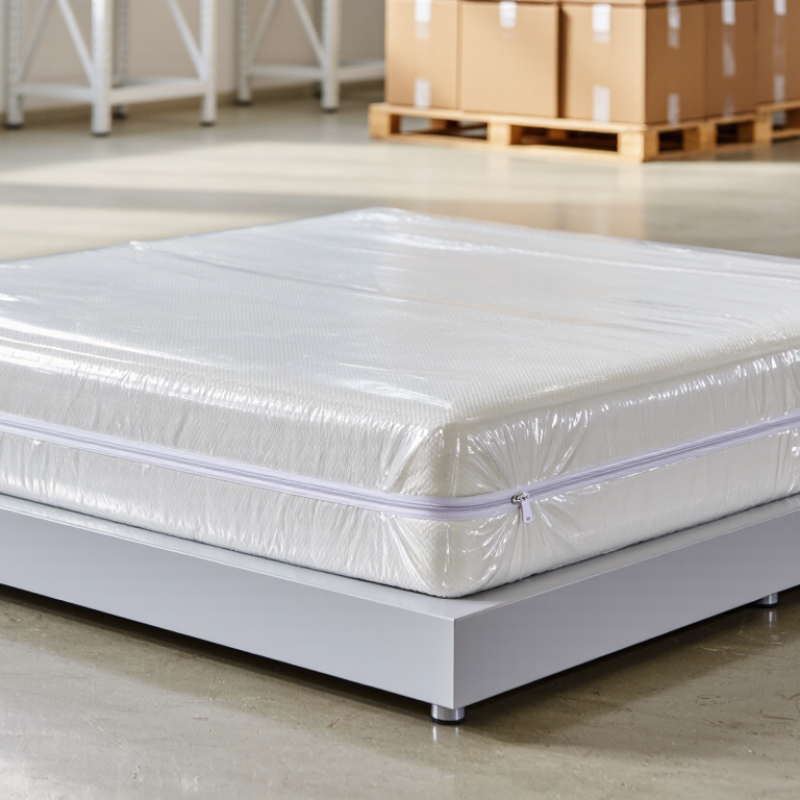
Wholesale buyers can choose from several plastic mattress-cover styles, each suited to different handling needs. Thin polyethylene covers are lightweight and economical for short-term protection during storage or transport. They usually slide over a mattress quickly, but can tear if dragged across rough floors. Keep that in mind.
Reusable vinyl covers feel heavier and often come in fitted or zippered designs. A fitted cover is simple to install, while a full encasement surrounds the mattress and closes along one edge. Check zipper quality and seam construction; weak points may leak or split after repeated use. Some buyers also consider flexible TPU covers, which can offer a softer feel than rigid plastic, though prices and specifications vary by supplier.
For bulk orders, compare actual mattress dimensions, material thickness, closure style, and cleaning instructions. Requesting samples can reveal details a product sheet misses, such as stiffness, surface noise, or a noticeable plastic odor. Not every low-cost option performs consistently. Ask how thickness is measured and whether the quoted size includes room for a mattress topper. Clear specifications help reduce mismatched stock, especially when purchasing covers for several bed sizes.
| Cover Type | Typical Material | Coverage and Closure | Key Characteristics | Common Wholesale Uses | Considerations for Buyers |
|---|---|---|---|---|---|
| Disposable Mattress Bag | Thin polyethylene (PE) film | Usually a loose bag or sleeve; open end secured with tape or a tie | Lightweight, water-resistant, and intended for short-term handling or storage | Moving services, temporary storage, renovation, and mattress transport | Generally less durable than reusable covers; check film thickness, dimensions, and closure method. |
| Fitted Vinyl Mattress Protector | Polyvinyl chloride (PVC) or vinyl film | Fitted-sheet style; elastic corners cover the sleeping surface and sides | Creates a waterproof barrier and is easy to wipe clean; nonporous film can feel less breathable than fabric | Care facilities, rental properties, dormitories, and settings that need wipe-clean protection | Confirm mattress depth and whether the product is designed for repeated laundering or surface cleaning. |
| Zippered Vinyl Mattress Encasement | PVC or vinyl film | Encloses the mattress on all sides and closes with a zipper | Provides full-surface coverage; the zipper and seams are important parts of the barrier | Institutional beds, storage, and applications requiring full mattress enclosure | Verify zipper construction, seam finishing, mattress dimensions, and cleaning instructions. |
| Fitted TPU Mattress Protector | Thermoplastic polyurethane (TPU) film, sometimes bonded to fabric | Fitted-sheet style; typically covers the top and sides | Flexible waterproof film; fabric-backed versions add a softer surface than a bare film cover | Hospitality, residential, and care settings seeking a reusable waterproof protector | Check whether the barrier is TPU and review laundering and drying limits for the finished product. |
| Zippered TPU Mattress Encasement | TPU film, often combined with a textile layer | Full enclosure with a zipper | Combines all-side coverage with a flexible film barrier; construction varies by product | Healthcare, hospitality, and other buyers needing an enclosed, reusable cover | Inspect zipper and seam details, fit tolerances, and care instructions; protective performance depends on the complete construction. |
| PEVA Mattress Cover | Polyethylene-vinyl acetate (PEVA) film | Available as a loose protective bag or fitted-style cover | Flexible plastic-film option; water resistance, thickness, and feel depend on the specification | General storage, transport, and selected institutional or household applications | Ask for the exact material specification and test documentation rather than relying on the material name alone. |
| Waterproof Laminated-Fabric Cover | Textile face with a polyurethane (PU) or TPU film layer | Commonly fitted-sheet style; some versions are available as full encasements | Fabric surface with a plastic-film barrier; generally offers a more textile-like feel than an exposed plastic sheet | Hotels, care facilities, and buyers seeking reusable protection with a fabric-touch surface | Confirm the laminate type, coverage, seam construction, and durability under the intended laundering routine. |
Related Posts
-
Why Choose Plastic Mattress Covers for Global Sourcing?
-
Top 10 Plastic Mattress Covers for Global Buyers
-
2026 Top Plastic Mattress Cover Options for Better Sleep Solutions?
-
Top 10 Benefits of Using a Plastic Mattress Cover for Better Sleep Quality
-

How to Choose the Best Plastic Mattress Cover for Your Needs
-
Why Choose a Plastic Mattress Cover for Better Protection and Hygiene?