A leaking bottle can leave a damp patch beneath a fitted sheet by morning. The right Waterproof Cot Mattress Cover helps protect the mattress, but it is not a substitute for safe-sleep practices. CDC’s 2022 data recorded about 3,700 sudden unexpected infant deaths in the United States. That figure concerns infant safety broadly; it does not show that mattress covers prevent these deaths.
Dr. Rachel Moon, a pediatrician and former chair of the American Academy of Pediatrics’ Task Force on Sudden Infant Death Syndrome, has emphasized: “The safest place for your baby to sleep is in a crib, bassinet, or play yard that meets safety standards.” Her guidance concerns the sleep space, not a particular cover. Still, it highlights why a cover must fit securely and must not change the mattress’s firm, flat surface.
Small details matter. Check the cot’s mattress dimensions, the cover’s fastening, wash instructions, and the manufacturer’s material disclosures. A waterproof layer that rustles loudly or bunches at the corners may be frustrating during a night change. Claims such as “breathable” also deserve careful scrutiny; the label alone does not establish safety. Public data comparing waterproof cot-cover performance is limited, so confident-sounding rankings can overpromise. That is worth remembering. These seven tips focus on practical checks, clear product information, and a snug fit—without treating any cover as a safety device.
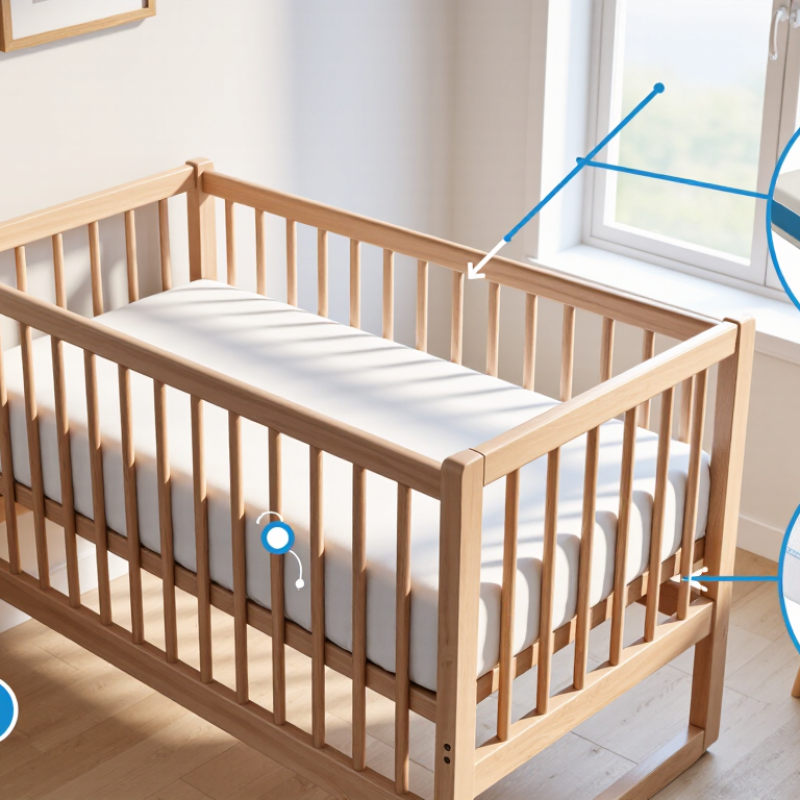
Before choosing a waterproof cot mattress cover, measure the mattress itself, not the sheet or bedding. Lay it flat on a firm surface and use a tape measure for its length and width. Record each measurement in the same units. Then measure the thickness, including any raised seams or padded edges. Small differences matter.
Cot mattresses can vary, even when they look similar. It is easy to assume a standard size will fit, but that assumption may leave loose fabric at the corners. Check the cover’s stated dimensions against all three measurements. If the mattress has rounded corners, note their shape too. A snug fit is the goal.
After fitting the cover, press gently around each corner and along the edges. The fabric should stay in place without excessive stretching or bunching. Too tight can strain seams; too loose can create folds. Check again after washing, since some materials may change shape slightly. It takes a minute. Don’t skip it.
These are examples of commonly sold UK cot mattress sizes, shown as nominal width and length. Measure your mattress itself before choosing a cover, and check the cover’s stated dimensions and fit guidance—sizes can vary between products.
A waterproof cot mattress cover should resist spills without trapping heat or feeling stiff. The ISO 811:2018 hydrostatic-pressure test offers a useful way to compare fabric resistance. Water pressure is gradually increased against a fabric sample until water passes through. Results are commonly reported as pressure or water-column height. Higher results generally indicate greater resistance under test conditions. That matters.
Tip: Compare test results only when methods and units match. A number alone can mislead. The test examines a fabric specimen, not necessarily the finished cover, its seams, or its corners. Ask whether the tested material came from the actual product and whether seams were assessed separately.
Consider daily use, too. A cover may perform differently after washing, stretching, or repeated contact with a damp sheet. Check care instructions and look for information about durability after laundering. I would not treat one pressure result as a guarantee. It is one useful measure, not the whole story. For a cot, inspect the fit: elastic edges should stay beneath the mattress, while the surface remains smooth and free of loose folds.
EN 16890:2017+A1:2021 sets safety requirements and test methods for cot mattresses. It does not automatically certify every waterproof cover used with one. That distinction matters. A cover can affect fit and how the mattress sits in the cot, even when the mattress itself meets the standard.
Check the mattress paperwork for the exact model and standard version. Ask the seller or manufacturer for a test report or clear documentation, rather than relying on a vague “tested” claim. If the paperwork is unclear, ask who performed the testing and what product it covered. A standards reference is useful, but it is not the whole safety picture.
Then check cover compatibility. Match the cover to the mattress dimensions and follow both products’ care instructions. Once fitted, look for loose fabric, raised corners, or gaps between the mattress and cot sides. Small details count. The cover should sit smoothly beneath the fitted sheet, without bunching after washing. I would not assume a cover is suitable just because it feels sturdy in your hand; fit and documented compatibility matter more. If the instructions do not explain whether the cover can be used with that mattress, ask the manufacturer before using it.
A “machine washable” claim says little about waterproof life. ISO 6330:2021 sets controlled domestic laundering procedures, including wash temperatures such as 30°C, 40°C, 60°C, and 95°C. These are test conditions, not a recommendation to wash every cover at the hottest setting. Check whether the care label matches the conditions used to support the claim.
Ask for the number of wash cycles, detergent type, drying method, and dimensional-change results. ISO 6330 standardizes laundering and drying procedures; it does not, by itself, prove that a cover remains waterproof afterward. That distinction matters. A credible test report should pair laundering with a water-penetration assessment, such as ISO 811, and state the results before and after washing. If a seller reports “50 washes,” ask which exact procedure was used and whether seams were included.
Look for specific results, not just “tested to ISO.” A useful report records shrinkage, seam condition, and water resistance after the stated cycles. Small detail. Big difference. In practice, a cover may look unchanged while its laminated backing has begun to weaken. I would also check whether the test sample was washed and dried exactly as the household care label instructs; that is easy to overlook.
A waterproof cot mattress cover should protect the mattress without bunching beneath a fitted sheet. Run your fingers along every seam; raised ridges, loose stitching, or pinholes can become weak spots after repeated washing. Stretch each elastic edge gently and check that it grips the mattress corners without pulling the cover out of shape. A snug fit matters. The American Academy of Pediatrics’ 2022 technical report estimates about 3,500 sleep-related infant deaths occur annually in the United States. A cover cannot prevent these tragedies, so keep the sleep surface firm, flat, and correctly fitted.
Tip: Check the corners first. A cover that creeps upward during a gentle tug may not stay secure overnight. I would not judge it by softness alone; that can be misleading.
Read the material label and care instructions before buying. Look for specific test information, not just the word “breathable”: ASTM D737 measures air permeability, while AATCC TM127 evaluates resistance to water penetration. These methods do not guarantee comfort or durability in every cot, but named tests make claims easier to assess. Check whether the cover can be washed at the temperature you need, and inspect it again after laundering. Labels can be vague, and I may be overcautious here, but unclear care directions are worth questioning.
| Tip | What to Inspect | Practical Check | Why It Matters |
|---|---|---|---|
| 1. Match the mattress dimensions | Check the cover’s stated length, width, and depth range against the cot mattress measurements. | Measure the mattress from edge to edge and include its full thickness. Do not rely on “cot size” alone. | A cover that is too small may not fit securely; excess fabric from an oversized cover can bunch beneath the sheet. |
| 2. Inspect the seams | Look for even stitching and a waterproof barrier that continues across seams, corners, and any joins. | Read the product label or care information for details about seam construction. After washing, check for gaps, peeling, or separation. | Seams and joins can be vulnerable points where liquid may pass through if the barrier is incomplete or damaged. |
| 3. Check the elastic edges | Look for elastic around the full perimeter or a fitted skirt designed for the mattress depth. | Fit the cover on the mattress and check that the edges stay underneath when gently tugged at each corner. | A secure fit helps keep the cover in place and reduces loose or bunched material on the sleeping surface. |
| 4. Consider breathability | Look for clear information about the fabric and waterproof layer, including whether the top fabric is described as breathable. | Check the care label and product specifications; “waterproof” alone does not explain how the cover handles airflow or moisture vapour. | Waterproof covers vary in construction. A breathable top layer may feel more comfortable than a fully non-breathable surface. |
| 5. Read the material label | Identify the top fabric and the waterproof backing or membrane, such as polyurethane (PU) or another stated barrier material. | Choose a cover with materials and care instructions clearly listed. Check any allergy or material sensitivities relevant to the user. | Knowing the materials helps you understand the cover’s construction and follow the correct cleaning instructions. |
| 6. Review washing and drying instructions | Check the permitted wash temperature, whether tumble drying is allowed, and any restrictions on bleach or fabric softener. | Compare the instructions with your regular laundry routine and inspect the barrier after washing for cracks, peeling, or leaks. | Heat and unsuitable cleaning products can damage some waterproof layers and reduce their service life. |
| 7. Check the full product information | Look for stated mattress compatibility, coverage area, warranty terms, and any applicable safety or material information. | Confirm that the cover is intended for the cot mattress type and that it does not alter the mattress fit or create loose folds. | Clear specifications make it easier to assess suitability and maintain a smooth, secure sleeping surface. |